

Texas Hold’em Strategy Guide: A Practical Beginner’s Guide to Playing Online
If you’re just getting into poker, Texas Hold’em is where almost everyone starts. It’s the most widely played format, both online and in casinos. The rules are simple enough to understand quickly, but the decisions can get complicated fast. That’s where basic strategy comes in.
You don’t need advanced math to begin playing better. What you need is structure — knowing which hands to play, when to stay aggressive, and when to let a hand go. This guide focuses on that foundation.
What Is Texas Hold’em Poker?
Short Definition of Texas Hold’em
Texas Hold’em is a poker game where each player receives two private cards. Five shared cards are then placed face-up on the table. From those seven cards, you build the best five-card hand possible.
There are four betting rounds — before and after each stage of community cards. The player with the strongest hand at the end wins the pot, unless everyone else folds first.
If you want a neutral overview of how poker works as a card game, you can look at Wikipedia, which explains the structure without strategy.
Why It’s Popular Online
Online poker made Texas Hold’em explode in popularity. The format works perfectly in digital rooms. You can play small stakes, join tournaments instantly, and see far more hands per hour than in live games.
Another reason it’s popular online is accessibility. You don’t need to sit at a physical table. You can play from home and start at very low stakes.
What This Guide Covers
This guide isn’t about advanced theory. It’s about the basics:
- Choosing the right starting hands
- Understanding position
- Knowing when to bet and when to fold
- Adjusting to online play
If you master those fundamentals, you’re already ahead of many beginners
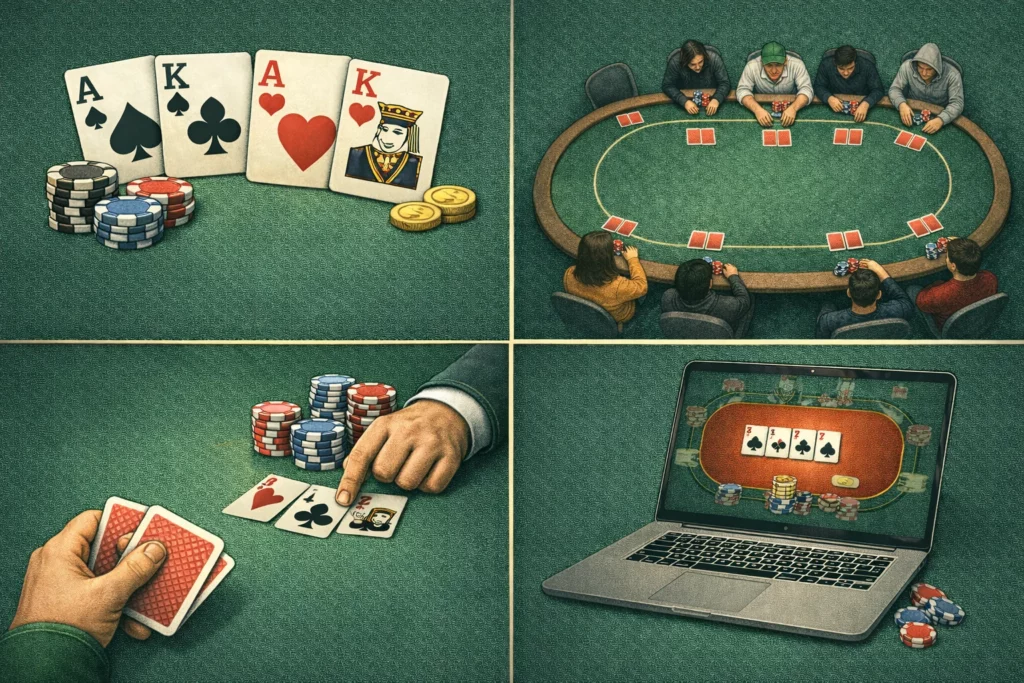
Manage your bankroll, choose the right tables, and play at a comfortable pace. Start with one table and improve step by step.
Basic Texas Hold’em Strategy for Beginners
Starting Hand Selection
The first real strategic decision in Hold’em happens before the flop. You look at your two cards and decide whether to continue.
New players often play too many hands. That’s one of the fastest ways to lose money.
Strong hands like big pairs (AA, KK, QQ) and high connected cards (AK, AQ) should almost always be played. Weak, unconnected low cards usually create trouble later.
A simple rule: if you’re unsure about a weak hand, folding is often correct.
Position and Aggression
Position changes everything.
If you act early in the betting order, you must make decisions without knowing what others will do. If you act late, you see how opponents respond before it’s your turn.
That information matters. You can play more hands in late position and fewer in early position.
Aggression also matters. Raising is generally stronger than calling. When you raise, you take control of the hand. When you just call, you give that control away.
Betting, Calling, Folding Basics
Every action should have a reason.
- Bet when you think worse hands will call.
- Raise when you want value or to apply pressure.
- Call when you have the right price and a realistic chance to improve.
- Fold when the situation doesn’t justify the risk.
Many beginners call too often out of curiosity. Curiosity is expensive in poker.
Common Beginner Mistakes to Avoid
Some mistakes show up again and again:
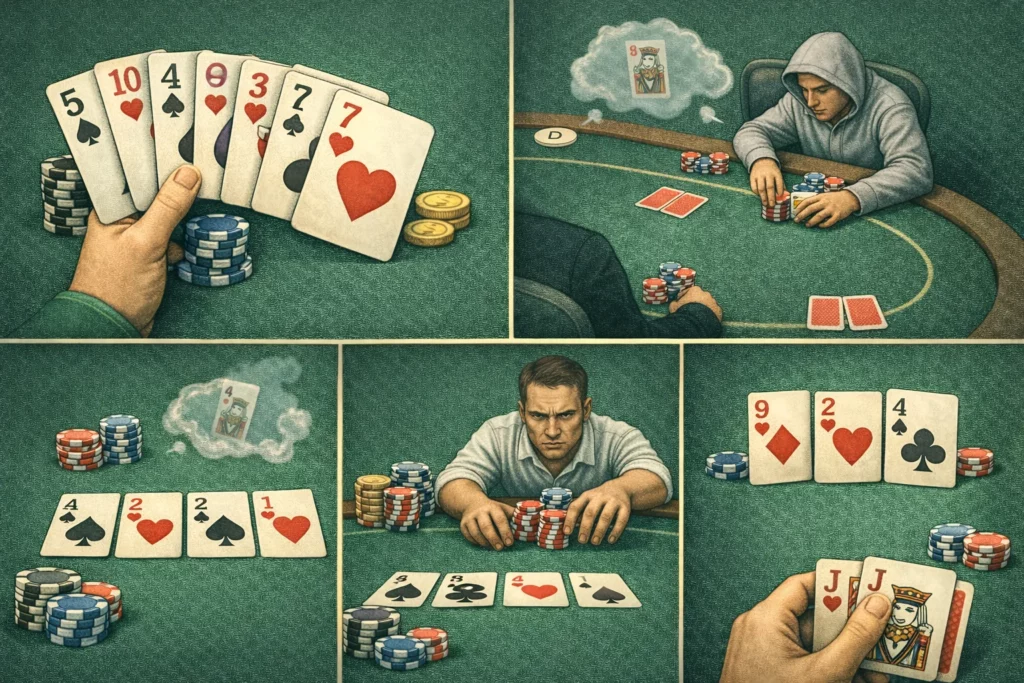
- Playing too many starting hands
- Ignoring position
- Chasing weak draws
- Bluffing players who rarely fold
- Overvaluing one pair
If you simply avoid these errors, your results will improve.
Tips for Playing Texas Hold’em Online
Online poker feels different from live play. The speed changes the experience.
Bankroll Management Basics
Even good players lose sessions. That’s normal. What matters is protecting your bankroll.
If you’re playing cash games, keeping at least 50 buy-ins for your stake level is a safe starting point. For tournaments, more is better because variance is higher.
The goal isn’t just to win — it’s to stay in the game long enough for skill to matter.
Table Selection and Traffic Levels
Not every table is the same.
Look for tables with active players and larger average pots. These often indicate looser play. Tough, regular-heavy tables are harder to beat, especially when you’re learning.
Choosing the right table can matter more than making a marginal strategic adjustment.
Playing Speed and Multi-Tabling
Online games move quickly. If you’re new, start with one table. Give yourself time to think through decisions.
Multi-tabling increases pressure. You’ll make faster decisions and mistakes become more expensive. Add tables only when you feel fully comfortable.
Using Poker Software and HUDs
Tracking tools can display statistics on opponents, such as how often they play hands or raise before the flop. These numbers help over time, but they don’t replace fundamentals.
If you don’t understand basic strategy yet, software won’t fix that.
Best Online Poker Rooms for Texas Hold’em
The room you choose can influence your experience just as much as your strategy. Traffic levels, opponent strength, and software quality all affect how comfortable and profitable your games may be.
Here’s a quick overview of several popular platforms offering Texas Hold’em.
Comparison Overview
| Room | Review | Rating | Traffic | Competition | Bonus | Visit |
| Ignition Poker | Recreational-friendly | A+ | High | Weak | $1,000 | Visit |
| SwC Poker | Crypto-based platform | A | Low | Weak | – | Visit |
| Americas Cardroom | Large tournament focus | A | High | Tricky | $1,000 | Visit |
| 888 Poker | Long-standing brand | D | High | Average | $400 | Visit |
| Betsafe Poker | European network | E | High | Average | €2,000 | Visit |
Ignition Poker
Known for a strong recreational player pool and steady traffic. Anonymous tables limit long-term tracking, which can create a different dynamic compared to traditional platforms.
SwC Poker
A smaller crypto-focused site with lower traffic. Competition tends to be softer, though game selection can vary depending on the time of day.
Americas Cardroom
Popular for its large tournament schedule and high guarantees. Cash games are active, but the overall player pool can be more competitive.
888 Poker
An established international brand with consistent traffic. Suitable for beginners looking for stable software and a balanced mix of opponents.
Betsafe Poker
Operates within a larger European network. Traffic is solid during peak hours, and competition is generally average across stakes.
Ready to Take the Next Step?
Improving at Texas Hold’em doesn’t happen overnight. Focus on one area at a time. Play fewer hands. Respect position. Avoid emotional decisions.
Consistency beats short bursts of aggression.
FAQ
What is the best starting hand strategy in Texas Hold’em?
Play strong hands aggressively and fold weaker ones without hesitation. Discipline before the flop makes later decisions easier.
How do I know when to fold, call, or raise?
Fold when you’re likely behind. Call when the price makes sense. Raise when you believe you’re ahead or can apply pressure successfully.
What is position in poker, and why is it important?
Position determines when you act. Acting later gives more information and usually increases profitability.
How does bluffing work, and when should I bluff?
Bluff when your story makes sense and your opponent is capable of folding. Bluffing every hand rarely works.
What is pot odds, and how do I calculate them?
Pot odds compare the cost of calling to the potential reward. If the reward outweighs the risk relative to your chance of improving, calling can be justified.
How can I read my opponents’ hands effectively?
Watch patterns. How often do they raise? Do they bet aggressively only with strong hands? Over time, tendencies become clear.
What are common mistakes beginners make in Texas Hold’em?
Playing too many hands, ignoring position, chasing weak draws, and calling too often are common early mistakes.